
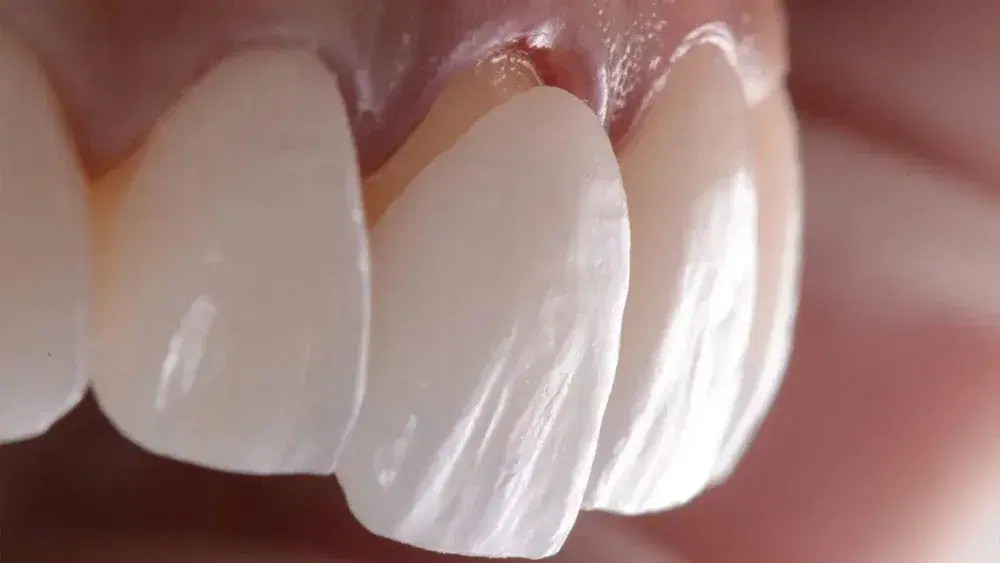
What Are Laminate Veneer in Turkey?
Laminate veneers are thin, custom-made ceramic restorations that cover the visible front surface of natural teeth. They can change tooth colour, contour, width, length, and overall appearance without covering the entire tooth.
Dentists commonly use porcelain or other advanced dental ceramics to produce laminate veneers. These materials can imitate the translucency and surface texture of natural enamel. A skilled dental technician can add subtle colour variations and fine details so the veneers do not appear flat or artificial.
Unlike full dental crowns, laminate veneers usually require less tooth preparation. The dentist focuses on the visible surface and may extend the ceramic slightly around the sides or biting edge. The exact design depends on tooth position, enamel condition, bite contact, and the desired cosmetic change.
What Problems Can Laminate Veneers Correct?
Laminate veneers can improve several concerns that affect the visible smile. They may conceal teeth that remain discoloured after professional whitening or have uneven colour due to enamel development, previous trauma, or old dental treatment.
The dentist may also use veneers to repair minor chips, improve worn edges, close small spaces, and create more consistent tooth lengths. Patients with naturally small or narrow teeth may benefit from carefully planned shape changes.
Veneers can visually improve mild rotations or small alignment irregularities. However, they should not replace orthodontic treatment when significant crowding or bite problems exist. Excessive preparation to make severely misaligned teeth appear straight can remove unnecessary enamel and reduce treatment predictability.
Who Is Suitable for Laminate Veneer in Turkey?
Suitable candidates generally have healthy gums, manageable bite forces, enough enamel for bonding, and realistic expectations. Patients should also maintain consistent oral hygiene and attend regular dental examinations.
The dentist must examine each tooth before confirming suitability. Teeth with large fillings, deep cracks, advanced wear, or extensive structural loss may require crowns instead of laminate veneers. Patients with active decay or gum inflammation need treatment before cosmetic procedures begin.
Teeth grinding can place high pressure on ceramic restorations. A patient who clenches or grinds may still receive veneers, but the dentist must assess the bite carefully and may recommend a protective night guard.
Younger patients should consider the irreversible nature of tooth preparation. Conservative alternatives such as orthodontics, whitening, or composite bonding may provide a better first option in some cases.
How Does Laminate Veneer Treatment Work?
Laminate veneer treatment usually involves consultation, smile planning, tooth preparation, laboratory production, trial fitting, and final bonding.
During the first appointment, the dentist examines the teeth and gums, discusses the patient’s expectations, and records the current smile. Digital scans, photographs, impressions, and dental imaging can support the planning process.
The dentist may create a digital design or temporary preview to demonstrate possible changes in tooth length and shape. After approving the general plan, the clinician prepares the selected teeth and records their final dimensions.
A dental laboratory then produces the ceramic veneers. Temporary veneers may protect the teeth and allow the patient to experience the proposed shape during this period. At the final appointment, the dentist checks the veneers before bonding them permanently.
Do Laminate Veneers Require Tooth Shaving?
Most laminate veneer treatments require some enamel reduction, but the amount varies according to the individual case. The dentist removes a thin layer from the front surface to create room for the ceramic and avoid an overly thick appearance.
Patients with inward-positioned or small teeth may require very little preparation. Teeth that project forward, contain dark discolouration, or need major shape changes may need more adjustment.
No-preparation veneers can work in carefully selected cases, but they do not suit every smile. Adding ceramic without sufficient space may produce bulky teeth, affect speech, or create areas that trap plaque near the gums.
Conservative preparation aims to maintain the majority of healthy enamel while providing enough space for natural-looking ceramic. The dentist should explain the planned preparation before treatment begins.
Are Laminate Veneers Painful?
Laminate veneer treatment should not cause significant pain. The dentist can use local anaesthesia during tooth preparation to keep the patient comfortable.
Mild sensitivity may develop after preparation, especially when the patient consumes cold food or drinks. Temporary veneers can cover the prepared surfaces until the final restorations are ready.
After bonding, the gums may feel slightly tender, and the bite may feel unfamiliar for a short period. These effects usually improve as the mouth adapts. Persistent pain, pressure while biting, or strong sensitivity requires a dental review.
Patients should tell the dentist about existing sensitivity before treatment. The clinician can adjust the preparation, bonding procedure, and aftercare plan accordingly.
How Long Does Laminate Veneer Treatment Take in Turkey?
Laminate veneer in Turkey often requires several appointments over approximately one week. The exact timeline depends on the number of veneers, laboratory process, gum health, and complexity of the case.
The first visit may include consultation, examination, photographs, digital scans, and treatment planning. Tooth preparation can take place during the same appointment or on a separate day.
The laboratory needs enough time to create accurate ceramic restorations with suitable colour, texture, and fit. The final appointment includes trial placement, patient approval, bonding, and bite adjustment.
Patients who require fillings, gum treatment, root canal therapy, orthodontics, or other procedures may need a longer treatment schedule. A rushed plan can compromise fit, appearance, and long-term comfort.
How Many Laminate Veneers Do I Need?
The required number of laminate veneers depends on the patient’s smile width, visible teeth, existing tooth colour, and cosmetic goals. Some patients need one veneer to repair a damaged tooth, while others choose six, eight, ten, or more for a complete visible smile.
The dentist should observe the patient while speaking and smiling naturally. Treating only the central front teeth may create an obvious transition if darker or differently shaped teeth remain visible at the sides.
However, placing veneers on healthy teeth without a clear aesthetic or functional reason increases cost and involves unnecessary treatment. The ideal number should create visual consistency while preserving unaffected natural teeth whenever possible.
Whitening the surrounding teeth before veneer colour selection can sometimes reduce the number of restorations required.
Do Laminate Veneers Look Natural?
Laminate veneers can look highly natural when the dentist and technician plan the colour, shape, texture, and translucency carefully. Ceramic can reflect and transmit light in a way that resembles natural enamel.
Natural-looking results do not depend on brightness alone. Tooth proportions, gum symmetry, edge transparency, surface texture, and subtle colour differences all influence the final appearance.
Veneers that look identical, excessively white, or too large can create an artificial result. The front teeth should have balanced but slightly different shapes. Canine teeth usually require a stronger contour, while lateral incisors may appear softer and slightly shorter.
The final design should also complement the patient’s lips, facial shape, age, and skin tone.
What Is the Difference Between Laminate Veneers and Porcelain Veneers?
The terms laminate veneer and porcelain veneer often describe the same type of treatment. Both refer to thin ceramic restorations bonded to the front surfaces of teeth.
The word laminate usually emphasises the thin, layered structure and conservative preparation design. Porcelain veneer refers more broadly to the ceramic material used to create the restoration.
Different ceramic systems may have different levels of translucency, strength, and opacity. The dentist and technician select the material according to the underlying tooth colour, veneer thickness, bite forces, and aesthetic expectations.
Patients should focus on treatment planning, tooth preparation, laboratory quality, and bonding technique rather than the terminology alone.
What Is the Difference Between Laminate Veneers and Dental Crowns?
Laminate veneers cover mainly the front surface of a tooth, while dental crowns surround most or all of the visible tooth structure. Veneers usually require less tooth reduction and work best on relatively healthy teeth.
Crowns may suit teeth with large fillings, extensive decay, deep cracks, severe wear, or significant structural damage. They can provide broader coverage when a veneer would not have enough support.
A dentist should not prepare a healthy tooth for a full crown when a veneer or another conservative treatment can achieve the required result. Equally, placing a thin veneer on a heavily damaged tooth may lead to fracture or failure.
The condition of each tooth should determine the restoration type rather than using one treatment across the entire smile.
What Is the Difference Between Laminate Veneers and Composite Bonding?
Laminate veneers use laboratory-produced ceramic, while composite bonding uses tooth-coloured resin shaped directly on the teeth. Bonding usually requires less or no tooth preparation and can often be completed in one appointment.
Composite bonding may suit minor chips, small gaps, uneven edges, and limited shape corrections. It provides a conservative and more affordable initial option.
Laminate veneers generally offer stronger colour stability, greater stain resistance, and a smoother surface. Ceramic can also reproduce natural translucency more effectively. However, veneers cost more and usually involve irreversible enamel preparation.
Composite may stain, chip, or lose polish sooner, but dentists can repair it relatively easily. The best option depends on the amount of correction, budget, bite, and long-term expectations.
Can Laminate Veneers Fix Crooked Teeth?
Laminate veneers can improve the appearance of mildly crooked, rotated, or uneven teeth. The dentist can adjust the visible shape to create a straighter-looking smile.
However, veneers do not physically move the teeth or correct the underlying bite. Significant crowding, protrusion, or rotation may require orthodontic treatment with braces or clear aligners.
Using veneers to mask severe misalignment may require aggressive tooth preparation. This approach can expose deeper tooth layers, increase sensitivity, and weaken the natural structure.
Orthodontic treatment before veneers may allow the dentist to use thinner ceramic and preserve more enamel. Some patients achieve their desired result through alignment and whitening without needing veneers.
Can Laminate Veneers Cover Dark or Stained Teeth?
Laminate veneers can conceal many types of tooth discolouration, including stains that do not respond to whitening. The dentist and technician can adjust ceramic thickness, translucency, and opacity to control the underlying colour.
Severely dark teeth require careful planning. A highly translucent veneer may allow the original shade to show through, while an overly opaque restoration may appear flat and unnatural.
The treatment team may use a more masking ceramic layer, a different cement shade, or a slightly thicker veneer. In some cases, internal bleaching or another dental treatment may improve the foundation before veneer placement.
The goal should involve both colour correction and natural light reflection rather than simply covering the tooth with a bright surface.
How Much Do Laminate Veneers Cost in Turkey?
The cost of laminate veneer in Turkey varies according to the number of teeth, ceramic material, dentist experience, laboratory quality, treatment complexity, and included services.
Additional procedures can affect the final price. Patients may need professional cleaning, fillings, gum contouring, root canal treatment, whitening, orthodontics, or a night guard.
A written quotation should explain the price per veneer and identify what the treatment package includes. Patients should ask whether the fee covers consultation, scans, temporary veneers, laboratory work, bonding, bite adjustments, and follow-up appointments.
Travel services such as hotel accommodation or airport transfers may provide convenience, but they do not indicate the clinical quality of the treatment. Patients should compare diagnostic standards and treatment details before focusing on package extras.
How Long Do Laminate Veneers Last?
Laminate veneers can last for many years when the dentist prepares and bonds them correctly and the patient maintains good oral health. Their lifespan depends on enamel support, bite forces, oral hygiene, diet, habits, and regular maintenance.
Veneers do not last forever. They may eventually chip, crack, loosen, or require replacement. Gum recession can expose the margins and affect the appearance over time.
Patients who grind their teeth face a greater risk of ceramic damage. Wearing a custom night guard can reduce pressure during sleep.
Regular examinations allow the dentist to check the veneers, gums, bite, and natural teeth beneath the restorations. Early treatment of small problems can prevent more extensive complications.
Do Laminate Veneers Stain?
Ceramic laminate veneers resist stains better than natural enamel and composite resin. Coffee, tea, tobacco, red wine, and coloured foods usually have limited effects on a smooth ceramic surface.
The natural teeth around the veneers can still change colour. Staining may also develop at the edges if plaque accumulates or the bonding line becomes exposed.
Professional cleaning helps maintain the surface, but the dental team should use instruments and polishing products suitable for ceramic. Abrasive products may scratch the veneer and make it look dull.
Professional whitening cannot lighten ceramic veneers. Patients who want a brighter overall shade should complete whitening before the dentist selects the final veneer colour.
Can Laminate Veneers Fall Off or Break?
A correctly bonded laminate veneer should remain secure during normal eating and speaking. However, excessive bite forces, limited enamel, dental trauma, or poor bonding conditions can cause a veneer to loosen.
Hard food, nail biting, chewing ice, opening packages with the teeth, and teeth grinding can fracture or dislodge ceramic. Patients should avoid these habits after treatment.
A dentist may be able to rebond an intact veneer. A cracked or damaged restoration usually requires replacement. Patients should never use household adhesive to reattach a veneer because it can damage the tooth and gum.
Any change in bite, movement, or discomfort should receive professional attention promptly.
What Are the Risks of Laminate Veneers?
Potential risks include temporary sensitivity, gum irritation, veneer fracture, debonding, bite discomfort, and dissatisfaction with colour or shape. Tooth preparation is usually irreversible because removed enamel cannot regenerate.
Poorly designed veneers may appear bulky, affect speech, trap plaque, or irritate the gums. Excessive tooth reduction can increase sensitivity and may raise the risk of future root canal treatment.
Decay can still develop around veneer margins if the patient does not maintain good oral hygiene. Veneers improve appearance but do not protect teeth from every dental problem.
A detailed examination, conservative preparation, accurate laboratory work, and careful bonding reduce avoidable complications.
How Should I Care for Laminate Veneers?
Patients should brush twice a day with a soft toothbrush and non-abrasive toothpaste. Daily interdental cleaning protects the gum margins and natural tooth surfaces between veneers.
Regular professional cleaning and dental examinations help maintain both appearance and oral health. Patients should inform their dentist that they have ceramic veneers so the clinical team can use suitable instruments.
A night guard may protect the restorations when the patient grinds or clenches. Patients should also avoid biting pens, fingernails, ice, hard sweets, and packaging.
Good maintenance supports healthy gums and prevents staining around the veneer edges.
How Should I Choose a Laminate Veneer Clinic in Turkey?
Patients should select a clinic that completes a full dental assessment before recommending veneers. The dentist should examine the teeth, gums, enamel, bite, existing restorations, and signs of grinding.
The consultation should explain the preparation depth, ceramic type, expected appearance, treatment alternatives, possible risks, and aftercare requirements. Patients should also ask who will design and produce the veneers.
Before-and-after photographs can show the dentist’s general aesthetic style, but they cannot confirm long-term quality. Patients should look for natural tooth shapes, healthy gum contours, and cases with similar starting conditions.
The clinic should provide a written treatment plan, transparent pricing, material information, consent documentation, and a clear follow-up process after the patient returns home.
Is Laminate Veneer in Turkey Worth It?
Laminate veneer in Turkey may provide meaningful value for patients who want a long-lasting cosmetic improvement and have suitable natural teeth for conservative bonding.
The treatment can improve several aspects of the smile at the same time, including colour, symmetry, shape, spacing, and visible tooth length. However, veneers should not serve as an automatic solution for every aesthetic concern.
Whitening, orthodontics, composite bonding, gum treatment, or a combination of conservative procedures may offer better value for some patients. A responsible dentist should compare these options before preparing healthy enamel.
Laminate veneers can produce a refined and natural-looking result when the treatment team prioritises tooth preservation, gum health, comfortable bite function, and personalised smile design. The strongest outcome should enhance the patient’s appearance without sacrificing unnecessary natural tooth structure.