
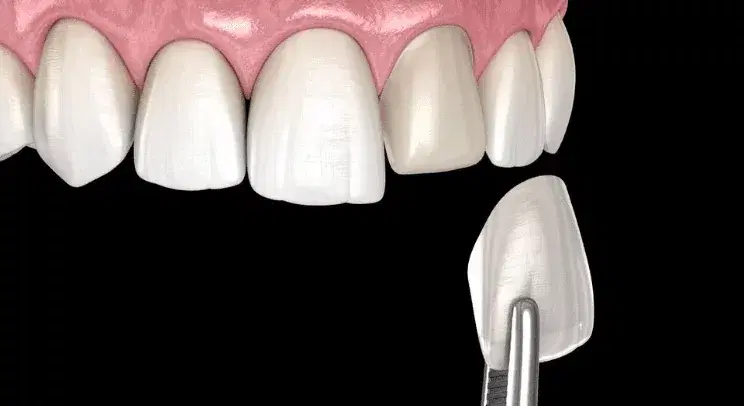
What Are E-Max Veneer in Turkey?
E-Max veneers are thin ceramic shells bonded to the front surfaces of natural teeth. Dentists use them to correct cosmetic concerns such as discolouration, small gaps, minor chips, worn edges, irregular shapes, and mild alignment problems.
The material contains lithium disilicate crystals that provide strength while maintaining a translucent appearance. Dental technicians can adjust the colour, opacity, texture, and brightness to match the patient’s facial features and neighbouring teeth.
E-Max veneers do not replace missing teeth and cannot correct every bite problem. They work best when the patient has enough healthy enamel for reliable bonding and does not need major structural reconstruction.
What Problems Can E-Max Veneers Correct?
E-Max veneers can improve several cosmetic concerns in the visible smile area. They may cover resistant stains that do not respond well to professional whitening. They can also reshape teeth that look small, uneven, narrow, worn, or slightly damaged.
Dentists may use veneers to close minor spaces, create a more symmetrical smile line, and improve the proportions of the front teeth. The treatment can also correct mild rotations or irregular edges when orthodontic treatment is not essential for function.
Veneers cannot treat active gum disease, extensive decay, severe crowding, advanced enamel loss, or major bite discrepancies. The dentist must first address these conditions or recommend another treatment.
Who Is Suitable for E-Max Veneer in Turkey?
Suitable candidates usually have healthy gums, stable oral hygiene, sufficient enamel, and realistic expectations. The dentist evaluates each tooth individually and checks whether the planned veneer will receive stable support.
Patients with stained, chipped, worn, uneven, or mildly misaligned teeth may benefit from treatment. People who already have large fillings, deep cracks, or significant structural damage may need crowns instead of veneers.
Heavy teeth grinding can increase the risk of ceramic fractures. Patients who clench or grind may still qualify for treatment, but the dentist may recommend bite adjustment, protective night guards, or an alternative restorative plan.
How Do E-Max Veneers Work?
An E-Max veneer covers the visible front surface of a tooth and may extend slightly around the sides or biting edge. The restoration changes how the tooth looks without replacing the entire crown.
The dentist prepares the tooth, records its shape, and sends the design to a dental laboratory or digital production system. A technician then creates the veneer according to the planned colour, contour, and surface texture.
During the bonding appointment, the dentist treats both the tooth and ceramic surface with appropriate materials. A dental adhesive and resin cement secure the veneer in place. Careful bonding allows the ceramic and natural tooth to function together as one structure.
How Is E-Max Veneer Treatment Planned in Turkey?
Treatment planning begins with a dental examination and a detailed discussion about the patient’s goals. The dentist checks tooth position, enamel thickness, gum levels, bite contact, lip movement, and smile width.
Clinical photographs, digital scans, impressions, and dental imaging may support the assessment. These records help the dental team identify hidden decay, root problems, previous restorations, or bone-related concerns.
Digital smile design can help visualise possible changes before treatment begins. Some clinics also create a temporary mock-up so the patient can evaluate tooth length, general shape, and smile proportions. The final plan should still reflect biological limits and functional requirements rather than an image alone.
Do E-Max Veneers Require Tooth Shaving?
Most E-Max veneer treatments require some enamel preparation, although the amount varies. The dentist may remove a thin layer from the front surface to create space for the ceramic and prevent an overcontoured result.
Minimal preparation can preserve more natural tooth structure and support reliable bonding. However, no-preparation veneers do not suit every patient. Adding ceramic without creating enough space may make the teeth look bulky or affect gum health.
The dentist should decide preparation depth according to tooth position, colour, enamel thickness, and the desired final shape. Conservative treatment does not mean avoiding all preparation. It means removing only the amount required for a stable and natural result.
Are E-Max Veneers Painful?
E-Max veneer treatment should not cause significant pain. Dentists commonly use local anaesthesia during tooth preparation to maintain comfort.
Patients may experience mild sensitivity after preparation, particularly when consuming cold drinks. Temporary veneers can protect the prepared teeth while the laboratory produces the final restorations.
After bonding, the teeth may need a short adjustment period. The bite can feel different, and the gums may remain slightly sensitive for a few days. Persistent pain, strong pressure, or discomfort while biting requires a clinical review.
How Long Does E-Max Veneer Treatment Take in Turkey?
The treatment can often take place over several appointments within approximately one week, although the exact schedule depends on case complexity and laboratory workflow.
The first visit usually includes consultation, examination, scans, photographs, and planning. Tooth preparation may take place during the same visit or at a separate appointment. The dentist then places temporary veneers when necessary.
The dental laboratory needs time to produce and characterise the final ceramic restorations. During the fitting appointment, the dentist checks colour, shape, contact points, margins, and bite before completing the bonding process.
Complex smile makeovers, gum treatment, root canal therapy, or bite correction may require a longer stay. Patients should not choose a clinic based only on the shortest advertised treatment time.
How Many E-Max Veneers Do I Need?
The number of veneers depends on how many teeth appear during a natural smile and which teeth require improvement. Some patients need one veneer to restore a damaged tooth, while others choose six, eight, ten, or more restorations for a wider smile makeover.
The dentist should assess the full smile rather than treating a fixed number of teeth for every patient. The width of the mouth, lip movement, tooth colour, smile line, and visible side teeth can influence the final recommendation.
Treating too few teeth may create a colour or shape difference between veneered and natural teeth. Treating more teeth than necessary can increase cost and remove healthy enamel without sufficient benefit. Balanced planning protects both appearance and tooth structure.
Do E-Max Veneers Look Natural?
E-Max veneers can create highly natural results because the ceramic allows controlled light transmission. A skilled technician can reproduce subtle colour variations, surface texture, translucency, and edge effects found in natural teeth.
The final appearance also depends on tooth preparation, ceramic thickness, underlying tooth colour, cement shade, and gum symmetry. Very opaque or excessively bright restorations may look artificial, even when the dentist uses a high-quality material.
Natural results usually include small variations rather than identical tooth shapes. The central incisors, lateral incisors, and canine teeth should maintain different proportions and surface characteristics.
Can E-Max Veneers Cover Dark Teeth?
E-Max veneers can cover many forms of discolouration, but severe darkening may require additional planning. Highly translucent ceramic can allow the underlying shade to influence the final appearance.
The dentist and technician may select a more opaque ceramic design, adjust veneer thickness, or use a specific cement shade. However, increasing opacity can reduce the natural light effect.
Some severely discoloured teeth may require internal treatment, bleaching, bonding, or crowns before the dentist can create a balanced result. The treatment plan should prioritise predictable colour control without unnecessary tooth reduction.
What Is the Difference Between E-Max Veneers and Zirconium Veneers?
E-Max and zirconium have different optical and structural properties. E-Max usually offers greater translucency, which makes it popular for front teeth and highly aesthetic cases.
Zirconium can provide higher strength and greater opacity. Dentists may prefer it when they need to mask a very dark tooth, restore a heavily damaged structure, or create a full crown.
The term zirconium veneer can sometimes describe a thin facing, although many zirconium restorations function as crowns. Patients should ask whether the proposed restoration covers only the front surface or the entire tooth.
Material selection should depend on tooth condition, bite forces, colour requirements, preparation design, and the location of the restoration.
What Is the Difference Between E-Max Veneers and Composite Bonding?
E-Max veneers use laboratory-made ceramic, while composite bonding uses a tooth-coloured resin applied directly to the tooth. Bonding often requires less preparation and can usually be completed more quickly.
Composite may suit small chips, minor gaps, edge repairs, and conservative shape changes. It costs less initially but can stain, lose polish, or wear faster than ceramic.
E-Max veneers generally provide better long-term colour stability, surface smoothness, and translucency. However, they require laboratory production and involve a higher treatment cost.
The dentist may recommend bonding for younger patients or minor corrections and reserve ceramic veneers for more extensive aesthetic changes.
How Much Do E-Max Veneers Cost in Turkey?
The cost of E-Max veneer in Turkey depends on the number of treated teeth, dentist experience, laboratory quality, ceramic design, case complexity, and services included in the plan.
Additional procedures can affect the total price. Patients may need professional cleaning, gum contouring, fillings, root canal treatment, temporary restorations, or a protective night guard.
A written quotation should explain the cost per tooth, diagnostic services, temporary veneers, laboratory work, bonding appointments, adjustments, and follow-up care. Patients should also ask whether the treatment includes airport transfers or accommodation, as these services do not reflect the clinical quality of the veneers.
Low prices may indicate basic laboratory work, limited planning, or reduced follow-up. Patients should compare the complete treatment process rather than focusing on the ceramic brand alone.
How Long Do E-Max Veneers Last?
E-Max veneers can remain functional and attractive for many years when the dentist plans them correctly and the patient maintains good oral health. Their lifespan depends on bonding quality, bite forces, enamel support, oral hygiene, diet, and daily habits.
Veneers may chip, fracture, debond, or require replacement over time. Gum recession can also expose the edges and affect appearance.
Patients who grind their teeth should use a protective night guard. Biting hard objects, opening packaging with the teeth, chewing ice, or applying excessive pressure can damage the ceramic.
Regular dental examinations allow the dentist to monitor the veneers, gums, bite, and supporting teeth.
Can E-Max Veneers Stain or Change Colour?
E-Max ceramic resists staining better than natural enamel and composite resin. Coffee, tea, red wine, and tobacco usually have less effect on the ceramic surface.
However, the natural teeth around the veneers can still change colour. Staining can also develop around margins when plaque accumulates or the bonding material becomes exposed.
Professional cleaning helps maintain surface brightness, but the dental team should use polishing systems suitable for ceramic. Highly abrasive products can damage the glaze and create a rougher surface.
Whitening treatment does not change the colour of E-Max veneers. Patients who want lighter natural teeth should usually complete whitening before final veneer colour selection.
Can E-Max Veneers Fall Off?
A properly bonded E-Max veneer should remain secure during normal function. Debonding can occur if the tooth has limited enamel, the bite places excessive force on the restoration, or contamination affects the bonding process.
Grinding, nail biting, chewing hard objects, and direct trauma can also loosen or fracture a veneer. In some cases, a dentist can rebond an intact restoration. A damaged veneer may require replacement.
Patients should not use household glue or attempt to reposition a veneer themselves. They should keep the restoration safe and arrange a dental appointment as soon as possible.
What Are the Risks of E-Max Veneers?
Potential risks include sensitivity, gum irritation, ceramic fracture, debonding, uneven margins, bite discomfort, and dissatisfaction with colour or shape. Tooth preparation is usually irreversible because enamel does not grow back.
Removing excessive tooth structure can increase sensitivity and reduce long-term predictability. Poorly shaped veneers can look bulky, trap plaque, irritate the gums, or affect speech.
Some teeth may eventually require root canal treatment, particularly when they already contain deep fillings, cracks, or previous damage. Careful examination and conservative preparation reduce avoidable complications but cannot remove every risk.
How Should I Care for E-Max Veneers?
Patients should brush twice daily with a soft toothbrush and non-abrasive toothpaste. Daily cleaning between the teeth helps protect the gum margins and reduce plaque accumulation.
Regular dental examinations and professional cleaning allow early detection of gum inflammation, decay, bite changes, or ceramic damage. Patients should tell their local dentist that they have ceramic veneers so the dental team can select suitable cleaning and polishing instruments.
A night guard can protect the veneers when the patient grinds or clenches. The patient should also avoid biting fingernails, pens, ice, hard sweets, and food packaging.
Can I Eat Normally With E-Max Veneers?
Patients can eat normally after the bonding material has fully set, although the teeth may feel sensitive during the early period. Softer foods can improve comfort immediately after treatment.
E-Max veneers can handle normal biting and chewing when the dentist designs the bite correctly. However, patients should avoid using the front teeth to break very hard foods.
Cutting hard fruit into smaller pieces and avoiding direct pressure on non-food objects can reduce fracture risk. These precautions protect both veneers and natural teeth.
How Should I Choose an E-Max Veneer Clinic in Turkey?
Patients should choose a clinic that carries out a detailed examination before recommending veneers. The dentist should assess enamel, bite alignment, gum health, tooth position, existing restorations, and signs of grinding.
The consultation should explain how much tooth preparation the case requires and whether alternative treatments could preserve more enamel. Patients should also ask who designs the veneers, which laboratory produces them, and how the clinic checks the final fit.
Before-and-after images can show a dentist’s aesthetic approach, but patients should look for cases with similar starting conditions. Excessively edited photographs cannot demonstrate margin quality, bite function, or long-term stability.
The clinic should provide a written treatment plan, informed consent information, material details, aftercare instructions, and a clear process for managing problems after the patient returns home.
Is E-Max Veneer Treatment in Turkey Worth It?
E-Max veneer treatment in Turkey may provide strong value for patients who want a long-lasting cosmetic improvement and qualify for conservative ceramic treatment. The material can create refined colour, texture, and translucency while preserving more tooth structure than a full crown in suitable cases.
The treatment offers the greatest benefit when the dentist prioritises diagnosis, enamel preservation, gum health, and bite stability. It should not serve as a standard solution for every cosmetic concern.
Orthodontics, whitening, gum treatment, or composite bonding may offer a more appropriate approach for some patients. A responsible treatment plan compares these options before preparing healthy teeth.
E-Max veneers can create a balanced and natural-looking smile when careful planning supports the ceramic work. The most successful result should suit the patient’s face, maintain healthy gum contours, provide comfortable function, and avoid unnecessary tooth reduction.